
What Rising Oil Prices Could Mean for Investors
Presented by Weller Financial Group
Ongoing military actions in the Middle East have increased uncertainty for investors. Global tensions like these are not new, and markets have faced many similar events over time. The key question for U.S. investors is how much these events affect the key factors that influence markets, such as job creation, inflation, economic growth, and corporate earnings.
In some cases, geopolitical events have had limited market impact. Military action in Venezuela earlier this year, for example, had little effect because it was short-lived and did not significantly affect economic conditions.
By contrast, Russia’s invasion of Ukraine in 2022 had more lasting consequences. The conflict disrupted global supplies of energy and agricultural goods, which contributed to a surge in inflation in the U.S. By June 2022, overall inflation was up 9 percent from the previous year. During that period, stock and bond markets struggled for the first nine months of the year before eventually reaching a low point in October.
With oil prices now rising sharply, investors are asking an important question: What should we watch going forward—and how could markets be affected?
Oil Supply Is the Key Issue
The lack of a quick resolution to the current conflict has increased worries about oil production and global shipping routes.
At its peak on Monday, the price of West Texas Intermediate crude—the primary U.S. benchmark for oil—surged about 50 percent to roughly $100 per barrel. This was the largest weekly percentage increase in oil prices since 1983. A move of that size naturally raised concerns about the potential effects on the global economy, and markets declined in response.
The Middle East remains one of the world’s most important oil-producing regions. The longer the conflict continues, the greater the risk that global oil supplies may face significant disruption.
One particular concern is the Strait of Hormuz, a major shipping route that carries roughly 20 percent of the world’s crude oil. The strait has been effectively closed over the past week. This closure shifts the situation from a potential risk to a real disruption in global oil supply.
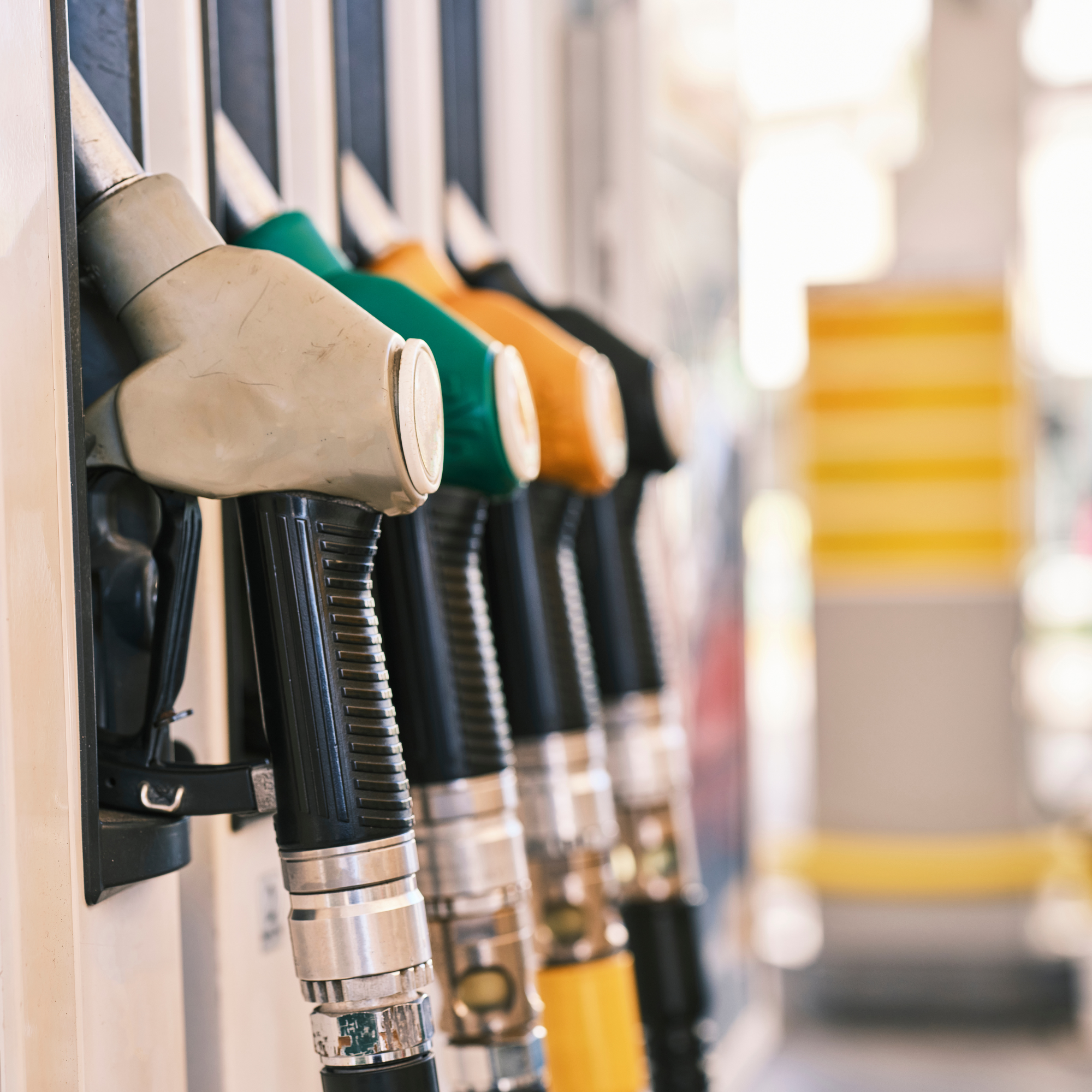
Americans are already seeing the effects at the pump. According to AAA:
- U.S. gasoline prices have risen more than 20 percent since the day before the U.S. and Israeli strikes on Iran.
- The national average price for regular gasoline is now $3.54 per gallon.
The Economic Impact Matters Most
Before the recent rise in oil prices, the U.S. economy was expected to begin to strengthen later in the year. Several factors could still support that outlook:
- Government stimulus passed in last year’s One Big Beautiful Bill Act may encourage consumer spending and business investment.
- Businesses now have tax incentives for new investments, making it more attractive to purchase equipment or expand operations.
- Tax refunds are expected to be larger this year, which could give consumers additional spending power.
At the end of 2025, inflation had been moderating. This was an encouraging sign for investors hoping the Federal Reserve (Fed) would reduce interest rates later in the year.
However, rising oil prices have raised concerns that inflation could be accelerating again. The most recent report on producer prices—an early measure of inflation—showed that they had already increased at the start of the year, even before the jump in oil prices.
At the same time, the February employment report added another layer of concern:
- The economy lost 92,000 jobs.
- The unemployment rate rose to 4.44 percent.
These developments have revived discussions about the risk of stagflation—a period when economic growth slows while inflation remains high. This scenario is often associated with the economic environment of the 1970s.
Similar fears also emerged in 2022, but ultimately didn’t materialize. Still, if stagflation were to occur, it would complicate the Fed’s policy decisions. The central bank might be reluctant to cut interest rates if inflation remains elevated.
It is still too early to know whether the current economic outlook will change significantly. The situation in the Middle East is evolving and will continue to be closely watched.
It’s important to note that the U.S. economy is in a very different position than it was in the 1970s. The country is now largely energy independent, and our economy is less dependent on gasoline than it was in past decades. These factors could help moderate the overall impact of rising oil prices.
A Longer-Term Perspective
Last week, markets declined across many asset classes:
- The Russell 3000 Index, which includes the 3,000 largest U.S. stocks, declined a little more than 2 percent.
- International stock markets declined more than 6 percent.
- U.S. Treasury prices fell as interest rates rose.
In other words, it was a challenging week for portfolios.
When markets decline, it’s natural for investors to feel anxious. That reaction is understandable—especially after several strong years for stocks.
Coming into 2026, the S&P 500 had just completed three consecutive years of double-digit gains and reached an all-time high on January 28.
Even with last week’s volatility, the decline has been relatively modest. At Monday morning’s low, the S&P 500 was down just more than 5 percent from its high five weeks earlier.
While the reasons may differ, market pullbacks happen every year. Some are minor; some cause significantly higher volatility. Recent examples include the pandemic, the inflation surge of 2022, and tariff and trade policy announcements last year. Historically, the average annual decline in the stock market is about 14 percent.
Stay the Course
Peter Lynch, the famous former Fidelity portfolio manager, once said people have lost more money preparing for a correction than they lose in corrections themselves. History supports that perspective. Despite the pullbacks that occur every year, there have been only three years in the past 23 when the stock market declined more than 1 percent.
The situation in the Middle East remains fluid. If tensions escalate further, risks could rise. However, well-diversified portfolios built around long-term goals are designed to help navigate a wide range of markets. Periods like this—when volatility increases—are exactly when that long-term approach becomes most important.
This material is intended for informational/educational purposes only and should not be construed as investment advice, a solicitation, or a recommendation to buy or sell any security or investment product. Please contact your financial professional for more information specific to your situation.
Certain sections of this commentary contain forward-looking statements that are based on our reasonable expectations, estimates, projections, and assumptions. Forward-looking statements are not guarantees of future performance and involve certain risks and uncertainties, which are difficult to predict. Past performance is not indicative of future results. Diversification does not assure a profit or protect against loss in declining markets.
All indices are unmanaged, and investors cannot actually invest directly into an index. Unlike investments, indices do not incur management fees, charges, or expenses.
Weller Financial Group is located at 6206 Slocum Road, Ontario, NY 14519 and can be reached at 315-524-8000. Advisory Services offered through Commonwealth Financial Network®, a Registered Investment Adviser.
Authored by Chris Fasciano, Chief Market Strategist, Commonwealth Financial Network®.
© 2026 Commonwealth Financial Network®